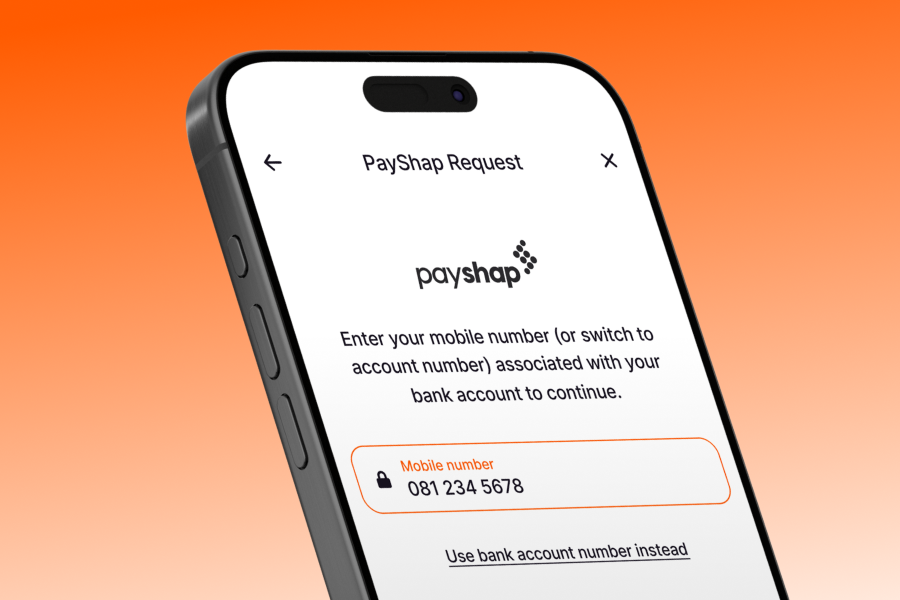
Stitch offers PayShap Request with redundancies + smart routing
The Stitch PayShap Request solution gives enterprise businesses in South Africa a fast, secure way to collect real-time payments across all major banks. Built on a multi-acquirer architecture with automated transaction routing, the offering is designed for maximum reliability, and several Stitch enterprise clients have already switched to real-time payment rails.
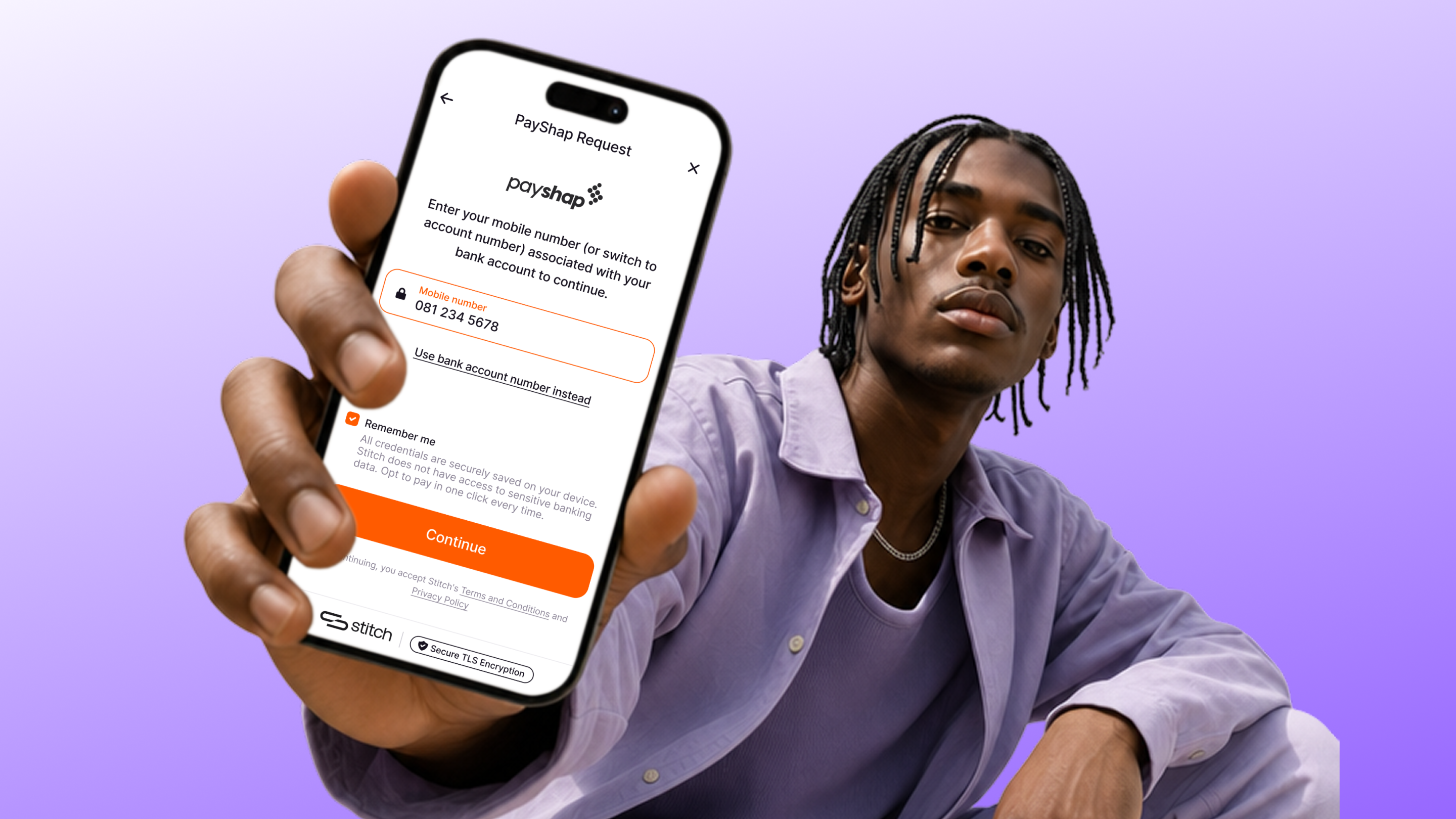
South African enterprise businesses can access PayShap Request through Stitch, giving them a fast and secure way to collect payments in real time across all major South African banks. Several Stitch enterprise clients have already switched to RTP (real-time payments) rails, and the offering is backed by a multi-acquirer architecture built for reliability at scale.
What is PayShap Request?
PayShap Request is a payment method built on PayInc's rapid payments infrastructure. It allows a business to send a payment request directly to a customer's banking app, where the customer reviews and approves the transaction. Settlement happens in near real time, with no redirect to internet banking and no manual entry of account details required.
We currently offer PayShap Request through redundant and consumer-centric routing. On the issuing side, we support all major South African banks, which means any customer with a PayShap-enabled account can approve and complete a payment request initiated through Stitch.
Built for reliability: multi-acquirer architecture
Where most PayShap Request providers rely on a single acquiring bank, our infrastructure maintains active connections to multiple acquirers at once. This gives enterprise businesses access to:
- Redundancy: if one acquiring bank experiences downtime or processing issues, transactions are routed through an alternative acquirer automatically, helping to ensure near-continuous availability
- Automated routing: our orchestration layer routes each transaction to the optimal acquirer based on real-time availability, performance and success rates
- Simplified integration: businesses can access multiple acquiring bank relationships through a single API, without managing separate contracts, integrations or reconciliation processes
Junaid Dadan, President at Stitch, said: "PayShap Request is an important step forward for real-time payments in South Africa. We've built our infrastructure to give businesses the most reliable access to these rails, with multiple acquiring banks and intelligent routing that keeps transactions flowing even when individual banks experience issues. For enterprise businesses that depend on payment availability, this kind of resilience is critical."
PayShap Request within the Stitch payments stack
PayShap Request is available through the same Stitch API that powers Pay by bank, Capitec Pay, card payments (Visa and Mastercard), Apple Pay, Google Pay, Samsung Wallet and Pay Later. Businesses already integrated with Stitch can access PayShap Request without a separate build.
For more on the evolution of PayShap and what comes next in rapid payments, see the latest Between the Seams episode featuring Junaid Dadan and Israel Skosana, Chief Product and Scheme Officer at PayInc.
FAQs
What is PayShap Request?
PayShap Request is a real-time payment method that lets a business send a payment request directly to a customer's banking app for review and approval, settling near-instantly without a redirect to internet banking.
How does PayShap Request with Stitch differ from other providers?
Stitch offers PayShap Request through a multi-acquirer architecture, meaning transactions can route through an alternative acquiring bank automatically if one experiences downtime, rather than relying on a single acquirer.
Which banks does Stitch support for PayShap Request?
Stitch supports all major South African banks on the issuing side, so any customer with a PayShap-enabled account can approve and complete a payment request sent through Stitch.
Do existing Stitch clients need a new integration to use PayShap Request?
No. PayShap Request is available through the same Stitch API that already powers Pay by bank, Capitec Pay, card payments, digital wallets and Pay Later, so integrated businesses can access it without a separate build.
Why does automated routing matter for real-time payments?
Automated routing directs each transaction to the acquiring bank with the best real-time availability, performance and success rate, which helps maintain payment reliability as transaction volumes grow.
Upgrade your payments stack with Stitch