Report: How South Africans shop and pay online in 2026
Our 2026 consumer payments research, with input from 3,000+ South Africans, offers the most detailed picture yet of how shopping and payment behaviour is evolving in South Africa. This post covers the key findings. Download the full report for the complete data.

In our 2026 consumer report, we found that South Africans are increasingly becoming familiar with shopping online and are blurring the lines between physical and digital channels. Of South African consumers that participate in e-commerce, 62.5% of respondents said they now shop online as much as or more than they shop in-store. Only 2.2% shop almost exclusively in physical stores.
The research, a quantitative survey of 3,000 consumers and 27 qualitative conversations, takes a deep dive into how South African shopping and payment behaviour is evolving. Here are the findings that matter most for businesses operating in this market.
76% of South African online shoppers spend more than R2,000 per month
This is not a market of small, tentative purchases. 76% of online shoppers now spend more than R2,000 per month on digital purchases, with nearly a quarter (22.7%) spending over R10,000. Clothing and apparel is the most commonly purchased category online at 78.1%, followed by groceries (67.8%), electronics (54.5%) and health and beauty (53.9%). South African consumers are buying across the full spectrum of categories through digital channels, often across multiple platforms in the same week.
48.5% of South Africans now shop on Temu, Shein and other international platforms
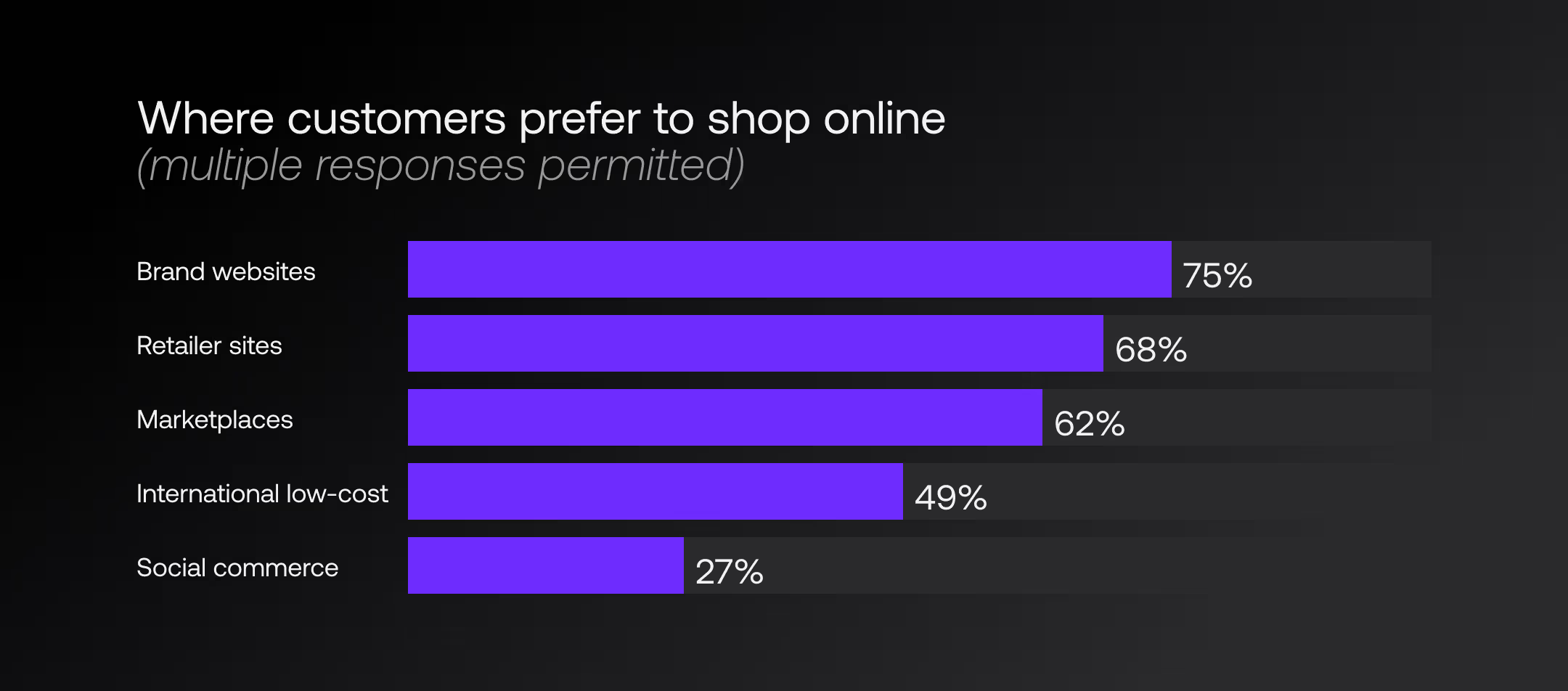
Direct brand websites lead all platforms at 74.6%, followed by retailer sites (68%) and marketplaces like Takealot and Amazon (61.8%). The most significant platform shift in this year's data, though, is the rise of international low-cost platforms: 48.5% of South African online shoppers now use Temu, Shein or similar, up from a relatively small presence two years ago.
93.3% of South African consumers tried a new payment method in the past year
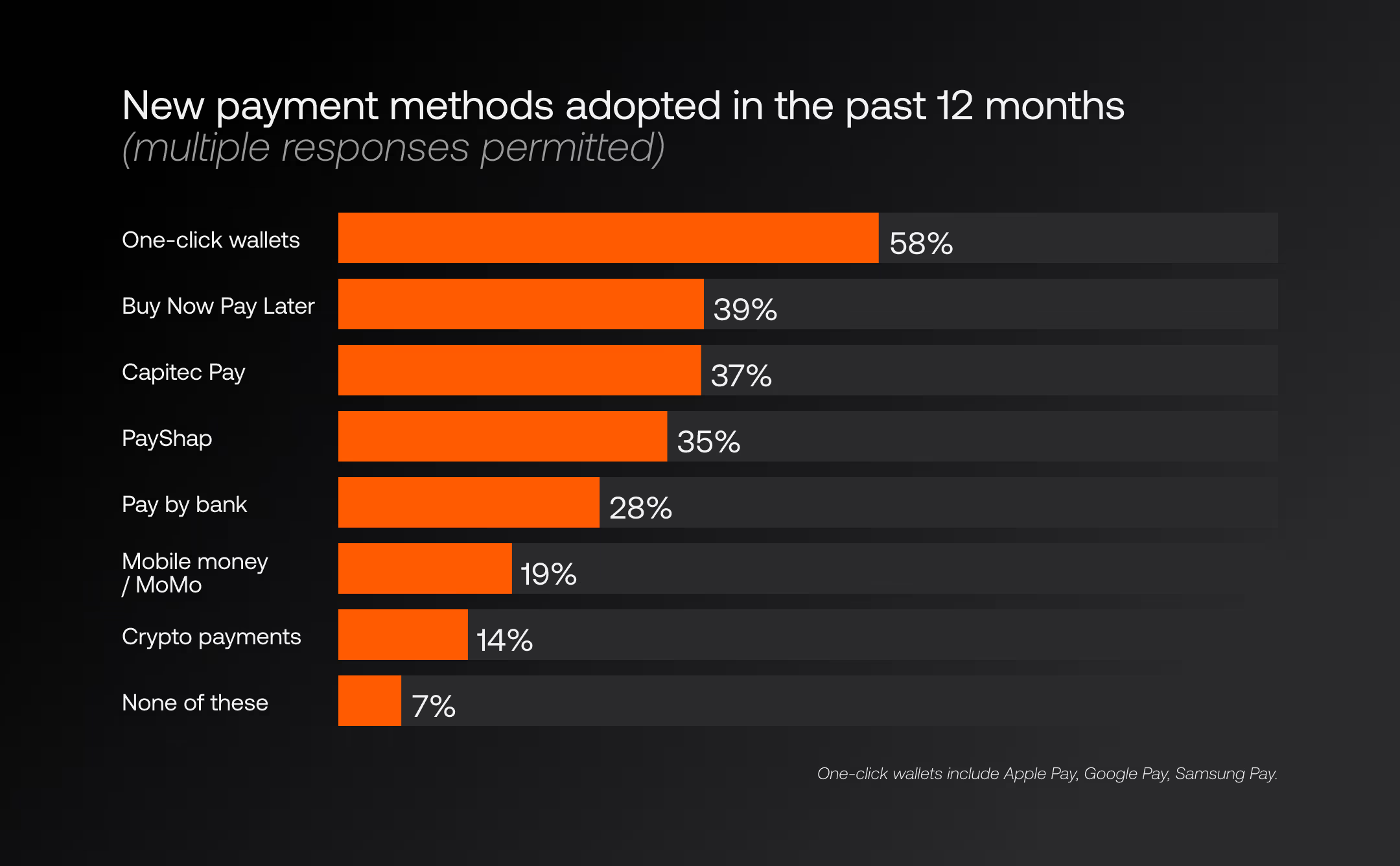
There is no single dominant payment method in South Africa anymore. Debit cards still lead across categories, but their margin is shrinking as bank-native and alternative methods gain ground. 93.3% of consumers tried a new payment method in the past year. One-click digital wallets, such as Apple Pay, Google Pay and Samsung Pay, led adoption at 57.5%, followed by Buy Now Pay Later (38.9%) and bank-specific apps (38.6%).
Capitec Pay has become the second most preferred payment method across purchase categories, reaching 24.6% preference for online shopping in just three years since its March 2023 launch. Bank-native payment methods are no longer niche.
31.1% of consumers say convenience is a top reason they choose a payment method
When asked what matters most when choosing a payment method, consumers ranked convenience first (31.1%) and security second (23.6%), followed by rewards and cashback (15.9%) and speed (13.9%). Checkout experiences that are both fast and frictionless, while feeling secure through biometric authentication or familiar bank-app confirmation, consistently outperform those that prioritise either attribute alone.
The 25th is South Africa's busiest online shopping day of the month
Stitch transaction data from Q1 2026 reveals a clear monthly rhythm tied to South Africa's salary cycle. The 25th is the single busiest shopping day of the month. The last week of the month (22nd to 31st) accounts for roughly 35% of all monthly transaction volume. Average basket value on the 24th is 46% higher than on the 8th, and the median basket rises approximately 20% in the final week.
At a weekly level, Friday sees 37% more transactions than Sunday, but Tuesday carries the highest average basket value. And the peak shopping hour across the Stitch platform is 20:00 SAST, which is well after traditional business hours. Checkout systems need to perform at their best in the evening, not just during the working day.
71% of credit-active consumers now use BNPL – including for groceries
Nearly four in ten consumers (38.9%) tried Buy Now Pay Later for the first time in the past 12 months. Among credit-active consumers, 71% use it at some frequency. Electronics remains the top BNPL category, but clothing & fashion is a clear second, chosen by 45.4% of BNPL users. The spread across six categories shows BNPL is no longer confined to big-ticket purchases: from fashion to groceries, consumers are integrating flexible payments across their entire shopping basket.
Nearly half of consumers (48.7%) want BNPL available both online and in-store. This omnichannel demand is largely unmet by South African merchants, and it represents a clear first-mover opportunity.
26.9% of digitally active South Africans buy directly through TikTok, Instagram, or WhatsApp
26.9% of South African consumers that shop online now do so directly through TikTok, Instagram or WhatsApp. That makes it the smallest of the five platform categories in our data, but it is worth watching closely. International low-cost platforms were at a similar level two years ago before surging to 48.5%. As TikTok Shop expands and WhatsApp Commerce matures, social platforms could become a primary purchase channel for younger consumers within 12 to 18 months.
Agentic commerce is already in motion and will change the game for retailers in the next year
31–34% of South Africans are already active ChatGPT users, with use cases that include research, product comparison and purchase decisions. AI-sourced retail traffic has surged globally, with AI product recommendations showing 4.4x higher conversion rates than traditional search. As agentic commerce moves from research to transaction, businesses with structured product data and API-first payment infrastructure will have a significant and compounding advantage.
Download the full report
These are the headline numbers. The full report includes granular breakdowns by income segment, category and channel, the complete payment method preference data, deep dives on BNPL behaviour and trust dynamics at checkout, and enterprise takeaways drawn directly from the research.
FAQs
What is the 2026 Consumer Payments Report by Stitch?
It is an annual study conducted by Stitch of how South African consumers shop and pay, covering online and in-person channels. The 2026 edition surveyed 3,000 South Africans in partnership with research agency Looka, supplemented by 27 qualitative conversations. It is the largest study of its kind in the country to date.
What were the key findings from the 2026 report?
Headline findings include: 62.5% of South African online shoppers now shop online as much or more than in-store; 93.3% of consumers tried a new payment method in the past year; Capitec Pay is now the second most preferred payment method across all purchase categories; 1 in 4 online card payment attempts fail before completing; and 71% of credit-active consumers use Buy Now Pay Later. The full data is in the report.
Where can I download the 2026 Consumer Payments Report?
The full report is available at consumer-report-2026.stitch.money.
Who conducted the 2026 research?
The quantitative survey of 3,000 South African consumers was conducted in partnership with research agency Looka in March 2026. Qualitative conversations were led by independent researcher Sandisiwe Ncube. Transaction data insights are drawn from the Stitch platform (Q1 2026).
Read the full report for deeper insights